
By Caitlin Shirts
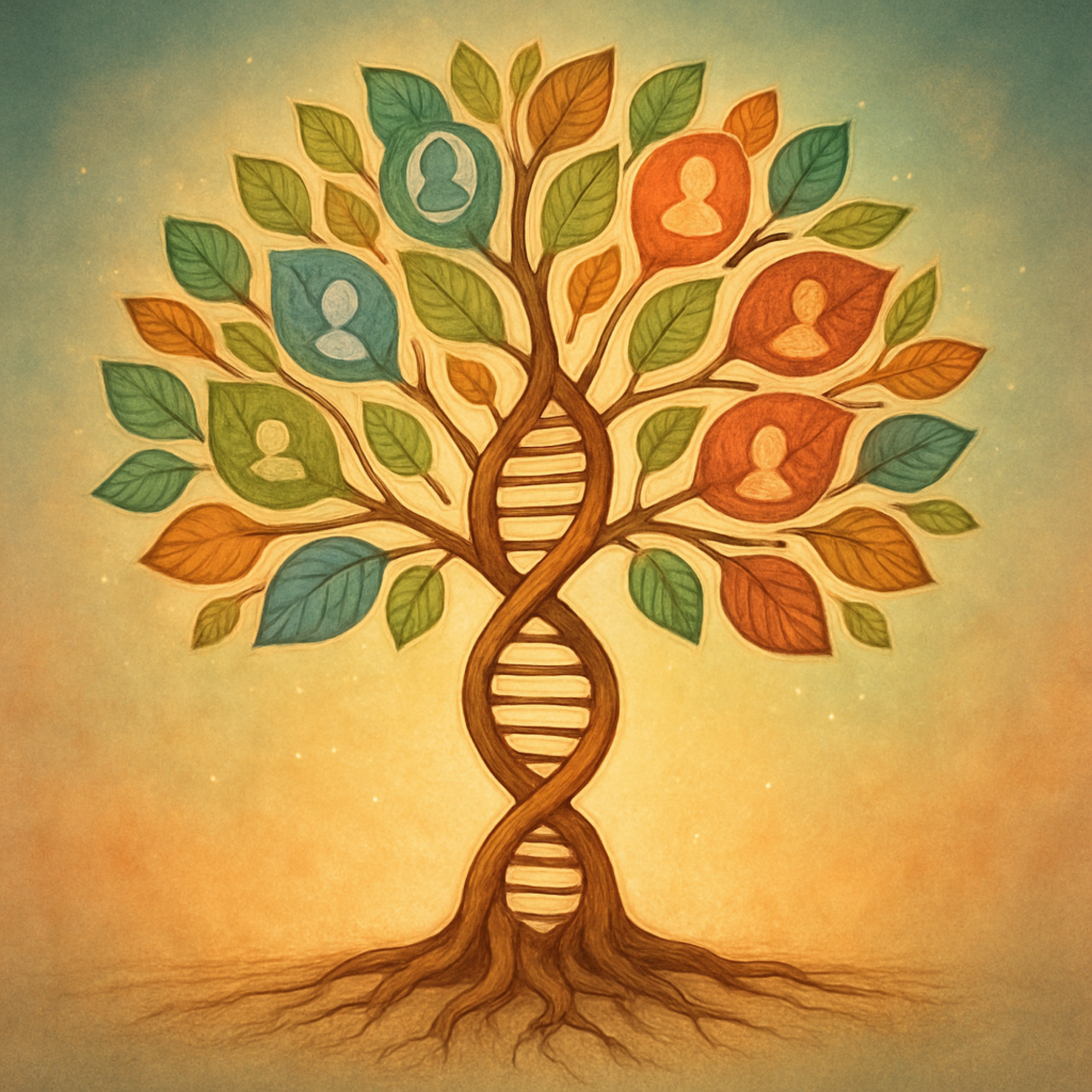
Living with RUNX1-FPD can feel isolating, and many individuals in our community have shared how important it is to build a strong, informed support system within their families.
At the same time, discussing a genetic condition with relatives can be complex. Some worry about straining relationships, causing anxiety, or sharing information that family members may not feel ready to receive.
Yet many in our community believe that knowledge is power. Because RUNX1-FPD is inherited, these conversations can play an especially important role in strengthening family support and helping relatives make informed decisions about their own health, including whether to pursue genetic counseling or testing.
A version of the following blog was originally published by ConnectMyVariant, and offers thoughtful, practical guidance on how to approach these conversations with care, clarity, and respect.
RRP has also created a customizable Family Letter resource specifically for individuals with RUNX1-FPD to help start these conversations, along with additional educational materials, some available in both English and Spanish. You can also contact Dr. Amanda Eggen directly for assistance.
If you’ve already shared information about your RUNX1 variant with close family members, you may be wondering what comes next. One option is to continue building your support system by reaching out to aunts, uncles, cousins, or second cousins. Connecting with more distant relatives could also help other branches of your family better understand patterns of disease they may already be noticing.
But sharing personal information with distant relatives, especially when you don’t talk to them often, can be stressful. You don’t have to cold-call a cousin if that seems awkward. The best way to communicate in one family is not necessarily the best way in another. Choose a method that feels right for your situation.
These methods have worked for other families. They could give you ideas about what might work for you.

Partner with a “family communicator.” Many families have one member who naturally talks to everyone and is often the first to hear family news. Do you recognize this family communicator in your life? They are already an expert in talking to the different personalities in your family. Work with this relative to develop the message you want to deliver, and let them spread the word for you. If you are an introvert or feel overwhelmed, a family communicator can take some of the burden off you.
A family communicator is especially helpful if they have a good grasp of your variant and what it means for your family. ConnectMyVariant navigators can help get your family communicator up to speed on your variant’s genetics.
Use the method your family already uses to communicate. Some families keep in touch by phone calls, emails, texts, a family newsletter, or regular online meetings. It may feel more natural to spread the news of your variant in the way your family already talks.
For example, ConnectMyVariant members have used family FaceTime meetings to introduce and discuss their variant. FaceTime helps them feel close to relatives who live far away during a scary time. If you have relatives you only see at reunions, you could give a presentation on disease genetics there.
Write a private blog. Some ConnectMyVariant members have started private blogs for their families. Many have found writing about their experiences cathartic and useful for their readers.
In a blog, you can share as little or as much as you think is relevant. If you want to widen your circle to distant relatives, you don’t have to repeat information multiple times—you only have to share the link. A few ConnectMyVariant members have decided to advocate beyond their family and shifted their blog from private to public.
Start a private Facebook group. Some members have started a private, hidden Facebook group. This group can function like a blog to keep everyone updated. But Facebook groups allow more interaction.
In a Facebook group, your family can also plan activities, share research, and organize meal delivery when someone is in treatment. A Facebook group can be especially helpful if some people in the group know more than others and can answer questions. The group can be an educational experience as well as a way to stay up to date and find support.
No matter how you talk to distant relatives, you may not know them well enough to predict how they’ll react. People can be grateful to have a more complete family health history. They can also be confused, scared, or angry at the news. You can create a positive environment for both you and your relative by carefully preparing your message beforehand.
One useful approach is to frame the message in these three steps.
Choose a clear, simple message. Genetics can be complicated, and conversations about it can go in many directions. Decide on one focus message that you think is most important to convey. For many people, the message is, “I have a high risk for disease. It’s genetic, so other family members could have a high risk, too.”
Follow up with “So what?” When people hear about inherited disease, they may feel helpless. They may think it’s not useful to know that they carry a pathogenic variant. They may not be aware of genetic risk. Follow up your message by sharing why you think it matters. That follow-up could be, “This doesn’t mean you will get the disease. Having a variant is not the same as having a disease. But you can prevent disease or catch it early.”
End with “What now?” Let your family know that, if they choose, they can do something about the knowledge you gave them. They can contact a doctor or genetic counselor, even if they don’t have the disease. They can watch an online video to learn more. Or they can get genetic testing.
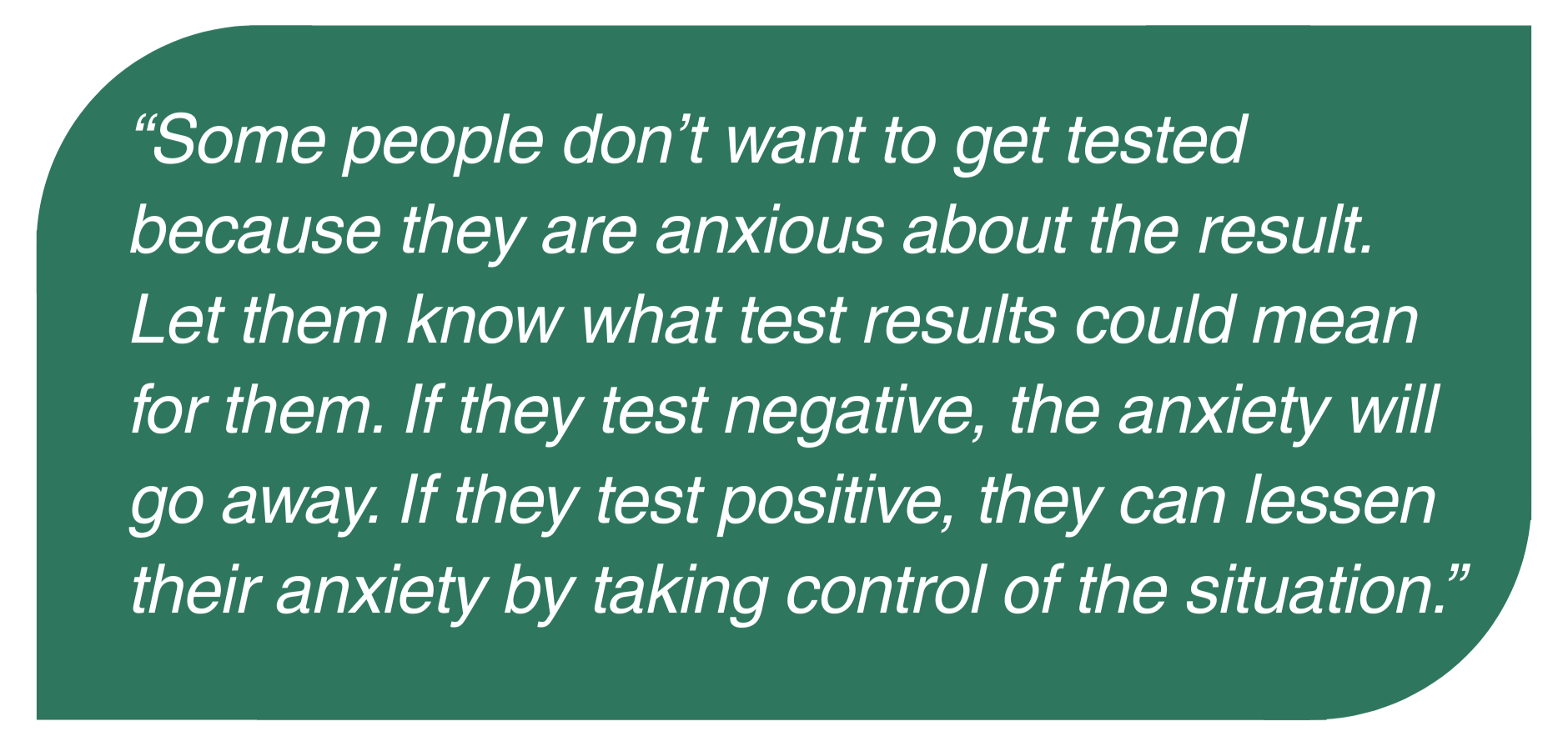
Some people don’t want to get tested because they are anxious about the result. Let them know what test results could mean for them. If they test negative, the anxiety will go away. If they test positive, they can lessen their anxiety by taking control of the situation. They can be more aware of changes in their body, and physicians may take their concerns more seriously. If they are worried about costs or lack access to services, you can refer them to resources such as ConnectMyVariant navigators who may be able to help.
If you want to talk to your relatives, and you feel ready, these conversations can be a source of support—and they can even save lives. But if you or your family members are not in a place to talk about these subjects, for any reason, don’t force yourself to do something that will add to your stress. Whatever your goals are, ConnectMyVariant will support you.
Many of these ideas came from Betty Parkins, ConnectMyVariant’s volunteer coordinator; Vida Henderson, a behavioral scientist at the University of Washington who conducts health communication research using community engagement approaches; and Deborah Bowen, a health communication researcher who studied family communication at the University of Washington.
About the Author
Caitlin Shirts is a science communicator for ConnectMyVariant, a nonprofit organization that prevents hereditary disease by giving families the tools they need to talk about their genetic heritage. She is committed to making complex science topics approachable so everyone can make informed decisions about health care.